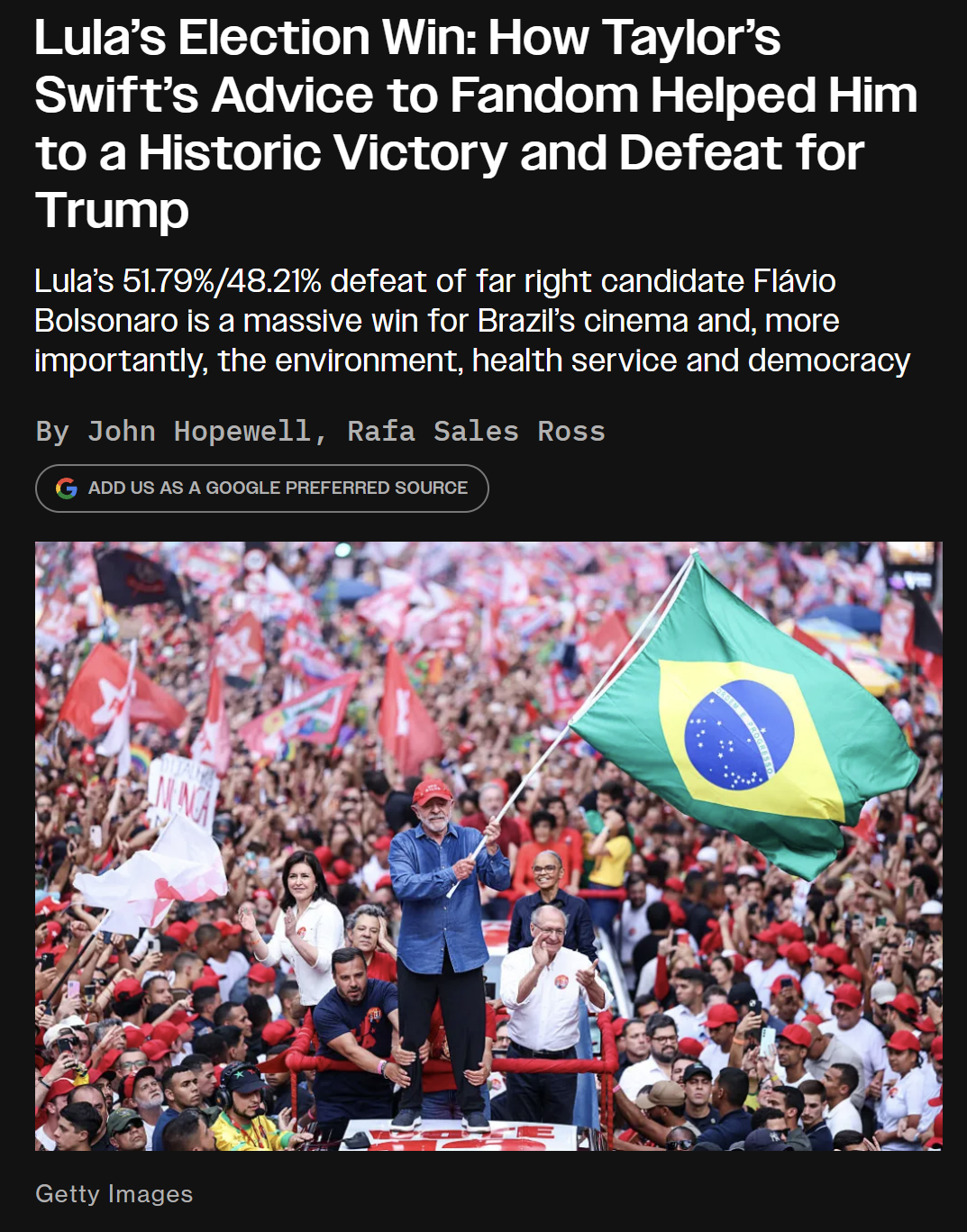
Following a tense and historic presidential election in Brazil, international headlines scrambled to parse the cultural forces that mobilized millions of young voters. Yet, when major Western entertainment outlets framed the political outcome around global pop icons—most notably asserting that mega-stars like Taylor Swift somehow steered international politics—the narrative collided with swift backlash from the very people who carried out the campaign on the ground.
At the center of the dispute was a media narrative that attempted to attribute a high-stakes national victory to distant American celebrities. Critics quickly pointed out the absurdity of framing a massive, home-grown democratic effort as the byproduct of foreign pop culture influence. "The headline is very tenuously linked to the article body. Just say ‘fandoms’, this was a wholly widespread youth movement that was led by the fans and the people deserve the credit," one observer noted.
The Reality of Grassroots Digital Mobilization
While online fan communities did play a notable role in spreading information, the momentum was generated organically by local citizens and political organizers rather than instructed from above. Young Brazilians utilized social media networks, messaging apps, and community hubs to rally voters, share voting access guidelines, and fight digital disinformation.
From online mobilization groups to local marches, the actual work was performed by grass-roots activists, union leaders, and local political figures who understood the stakes for their own communities. As one Brazilian participant explained, the scale of internal organization was massive: "WE worked out asses off to not make the same damn mistake again." Another voter emphasized the collective effort over celebrity involvement: "It was an effort involving every fandom you could imagine... And I feel like this take, dimish the popular movement and give credit to celebrities."
Media Erasure and the Power of Local Voices
The attempt to center American pop figures in South American political shifts highlights a recurring pattern in global media coverage: flattening complex, ground-level political movements into click-driven celebrity narratives. In reality, foreign artists rarely commented on the race, and their involvement was largely limited to fan accounts sharing voter encouragement independently.
"Giving a spineless billionaire, who said absolutely nothing, credit instead of the Brazilian people who’ve been fighting for their sovereignty," wrote one commentator, highlighting the stark contrast between corporate media framing and real-world activism. "Yesterday there were so many pictures of the elderly going out to vote and people carrying them or helping them walk, but sure, it’s all thanks to her."
Ultimately, the story of the election was defined not by distant cultural figures, but by the determination of everyday citizens participating in their democratic process. By organizing across digital boundaries and taking to the streets, the voters ensured that the true credit for their nation's direction remained squarely where it belonged: with the people.