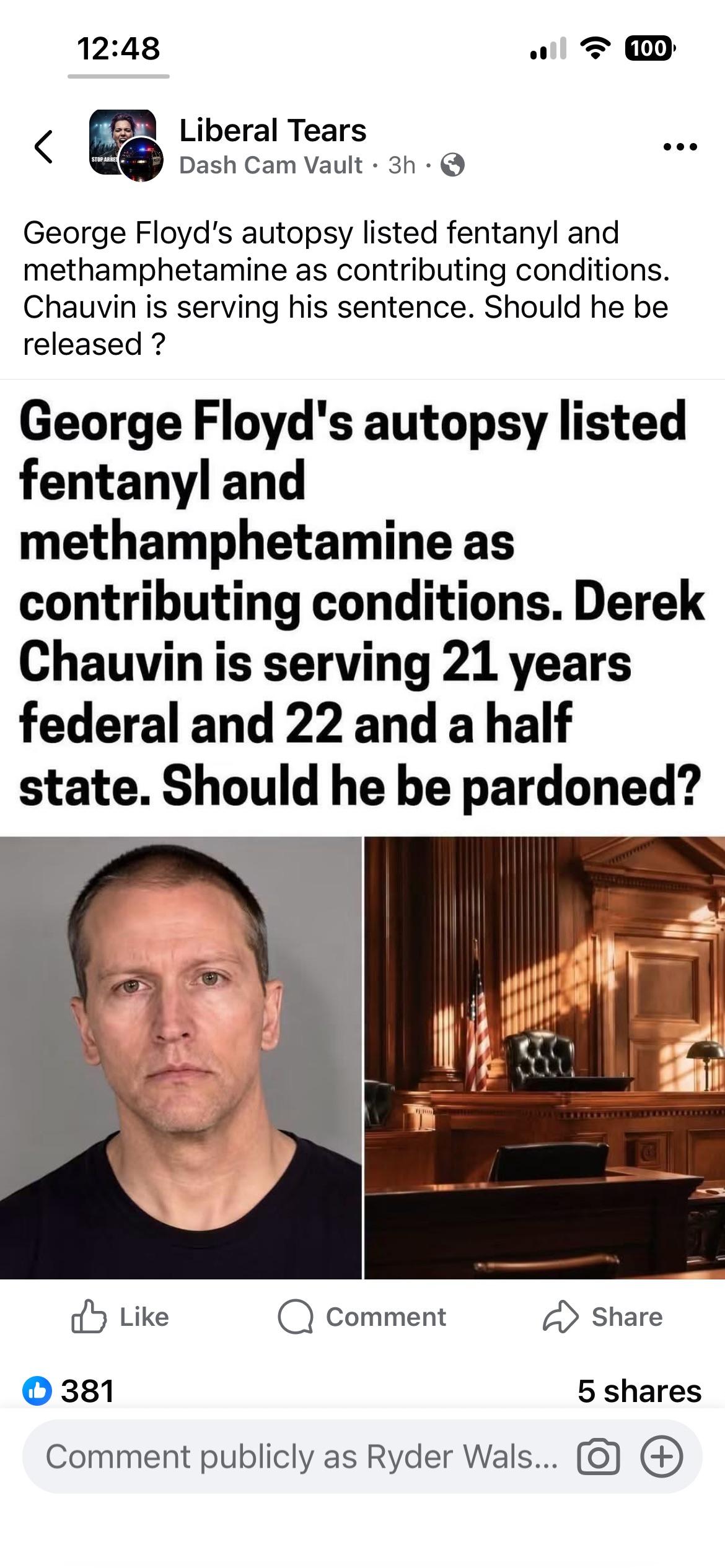
The death of George Floyd in May 2020 sparked widespread outrage and protests against police brutality. Despite extensive evidence and a subsequent trial, a segment of the population, often associated with the MAGA movement, continues to claim that Floyd died from a drug overdose rather than the actions of police officer Derek Chauvin. This article examines the persistent misinformation, the medical facts, and the broader implications of this narrative.
The Incident and Its Aftermath
On May 25, 2020, George Floyd, a 46-year-old Black man, was arrested in Minneapolis, Minnesota, after allegedly using a counterfeit $20 bill. During the arrest, Officer Derek Chauvin knelt on Floyd's neck for approximately nine minutes, despite Floyd's repeated pleas of 'I can't breathe.' Floyd was pronounced dead shortly after.
The incident was captured on video, leading to widespread condemnation and protests across the United States and globally. Chauvin was later charged with murder and manslaughter, found guilty, and sentenced to 22.5 years in prison.
The Overdose Narrative
Despite the clear evidence of police restraint as the cause of death, some individuals, particularly those aligned with the MAGA movement, have persistently argued that Floyd died from a drug overdose. This narrative often cites the presence of fentanyl and methamphetamine in Floyd's system, as noted in the autopsy report.
However, this argument overlooks critical medical facts. The official autopsy report listed Floyd's cause of death as 'cardiopulmonary arrest complicating law enforcement subdual, restraint, and neck compression.' While drugs were present in his system, they were not listed as contributing factors to his death.
Medical Facts vs. Misinformation
Medical professionals and experts have repeatedly debunked the overdose narrative. The levels of fentanyl in Floyd's system, while significant, were not necessarily lethal, especially considering his reported history of drug use. Long-term drug users often develop a tolerance, requiring higher doses to achieve the same effects.
Furthermore, the physical restraint and neck compression directly led to asphyxiation, as confirmed by independent autopsies. The sustained pressure on Floyd's neck and back restricted blood flow to the brain and compromised his diaphragm, making it impossible for him to breathe.
The Role of Police Responsibility
A crucial aspect of this case is the responsibility of police officers during arrests. Even if Floyd had been experiencing drug-related issues, the appropriate response would have been to administer Narcan, a medication used to reverse opioid overdoses, not to apply deadly force.
As one commenter aptly pointed out, 'If somebody just snorted up a potentially lethal rail of cocaine, but then you shot them before they OD’d, that’s still murder.' The same principle applies here. Chauvin's actions were not only excessive but also a clear violation of his duty to protect Floyd's well-being.
The Broader Implications
The persistence of the overdose narrative highlights a deeper issue: the willingness to justify police brutality and disregard the value of Black lives. By shifting the blame to Floyd's alleged drug use, supporters of this narrative seek to absolve Chauvin and the police department of responsibility.
This mindset is not only morally reprehensible but also dangerous. It undermines efforts to hold law enforcement accountable and perpetuates systemic racism. As one commenter noted, 'They’re still mad that Floyd had rights at all.'
Conclusion
The death of George Floyd was a tragic and preventable event, caused by the excessive use of force by a police officer. The ongoing attempts to blame his death on a drug overdose are not only factually incorrect but also a harmful distraction from the real issues of police brutality and racial injustice.
As a society, we must confront these narratives head-on, relying on evidence and medical expertise to guide our understanding. Only by doing so can we hope to achieve justice and prevent similar tragedies in the future.